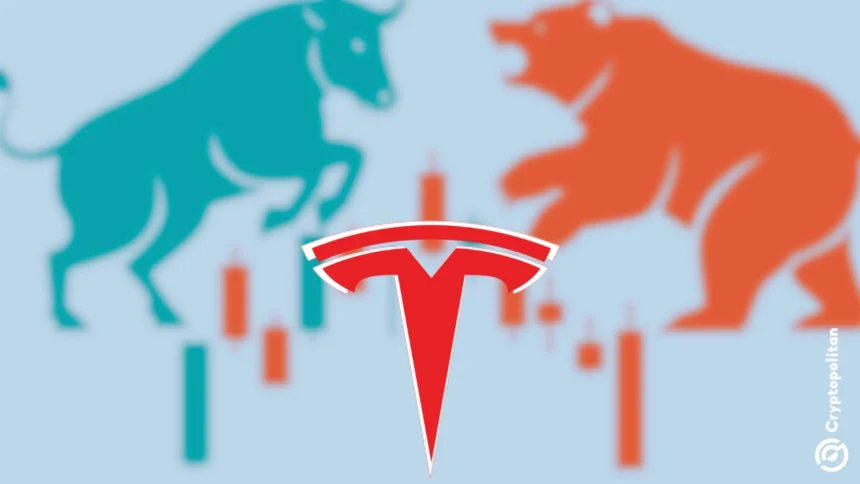

Michael Burley said Tesla is too expensive and has been for a long time. In a post shared to his new Substack on Sunday, Barry called the company’s valuation “ridiculously overvalued,” citing the company’s sky-high 209 times forward earnings.
This criticism was first picked up by Business Insider and didn’t stop there. Burley directly criticized the way Elon Musk is running the company, warning that Tesla’s shareholder dilution is accelerating.
berry explained Tesla does not buy back its own stock to support its stock price, and instead uses stock compensation to lower its stock price by 3.6% each year. He said Musk’s $1 trillion compensation proposal, which shareholders approved last month, would only increase that dilution. “Tesla’s market cap is currently ridiculously overvalued and has been for quite some time,” the hedge fund manager wrote.
Burley criticizes Musk’s strategy and Tesla’s changing technology promises
In his post, Berry also criticized Tesla’s pattern of jumping from one promise of futuristic technology to the next. He noted that Musk’s fans were “all in on electric cars until there’s competition, then all on self-driving until there’s competition, and now they’re all on robots until there’s competition.”
Despite unloading all of this, Berry declined to say whether he currently holds short or long positions. tesla stock. Berry has shorted Tesla before. So is Jim Chanos, who recently expressed concerns specifically about Nvidia’s vendor funding strategy.
Berry’s message came just as Wall Street analysts were beginning to upgrade Tesla’s outlook. Last week, Melius Research called it a “must-have” largely due to advances in chips and autonomy.
The week before, Stifel raised his price target and reaffirmed his buy rating, citing growth in Tesla’s robotaxi technology and fully self-driving (FSD) capabilities. That positive momentum hasn’t changed Barry’s stance at all.
Burry pursues Nvidia, says AI demand is a mirage
Burley started the trend last month when he disclosed new short positions in both Nvidia and Palantir, using put options to bet that the stocks would fall.
Berry said Nvidia’s stock compensation cost shareholders $112.5 billion, cutting real shareholder returns in half.
He accused AI companies of hiding depreciation costs for their hardware and exaggerating how long GPUs last to justify the huge outlay.
Barry also suggested that demand for AI is artificially inflated, saying that many AI customers are essentially funded by the same vendors who sell them the equipment, which he described as a circular financing scheme.
Short sellers believe these customers are supported only long enough to sustain the illusion of demand.
Nvidia quickly responded in a seven-page memo sent to Wall Street analysts, saying Berry’s miscalculations were primarily due to the inclusion of RSU taxes, which would inflate costs.
Nvidia has insisted that the actual stock buyback amount was $91 billion, not $112.5 billion, that employee compensation is “in line with industry peers,” and that it is not Enron.
Burley countered, “I wasn’t comparing Nvidia to Enron.” Rather, he said, the apt comparison is to Cisco in the late 1990s. At the time, the company built more infrastructure than it needed, and when investors found out, the stock price plummeted 75%.
Since the beginning of 2023, Nvidia’s stock price has increased 12 times. The company currently has a market capitalization of $4.5 trillion, and is on track to become the fastest company in history to reach that value. None of that allayed Barry’s skepticism. Even with record profits, he believes the underlying business model is unstable and the growth story will be short-lived.
Berry’s record since 2008 is all over the place. Yes, he was an early denouncer of the housing collapse, which made him famous. But ever since, he has continued to warn of collapse after collapse, and often premature collapse. This earned him the label “Permabear.” He made the smart move to buy GameStop early on, but then sold before the meme stock boom of 2021.
If you’re reading this, you’re already ahead of the curve. Read our newsletter and stay there.