
The recent decision by the US Federal Reserve to resume purchases of Treasury securities has raised questions among macroeconomic market analysts.
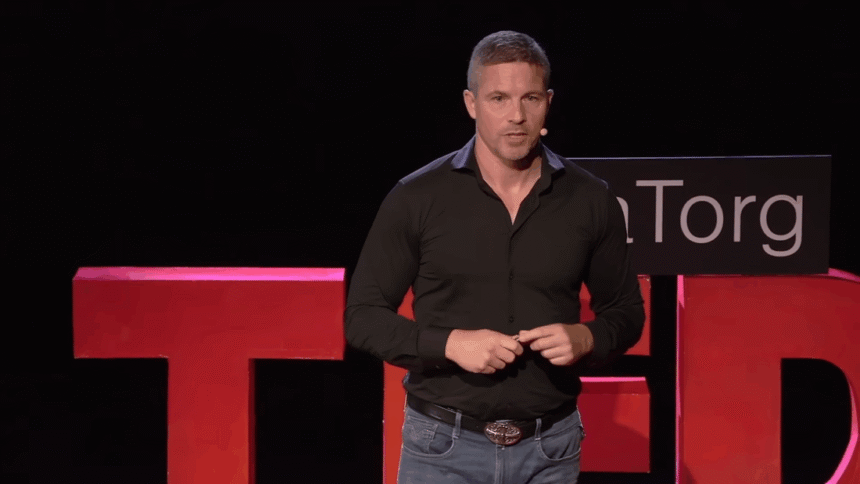
One of them is Henrik Seberg, an economist and financial strategist. He argued that the U.S. economy is “not doing well, but getting worse” and could lead to a recession in the coming months.
Zeberg, known for his cyclical risk models and monitoring of liquidity indicators, argues: FED is acting to limit rising liquidity pressures of the financial system.
“So…if the economy is doing well, why does the Federal Reserve need to buy Treasury securities?” the analyst asked. In his opinion, the financial authorities are “getting the signal” that liquidity is shrinking, but they “don’t understand that consumers will be crushed and that will cause a recession.”
Seberg’s critical stance follows the US central bank’s announcement on Wednesday. The facility reported that: will start purchasing short-term government bonds From December 12th.
It is estimated that the Fed will begin a purchasing program of nearly $40 billion. Its stated purpose is to “manage market liquidity levels” as well as ensure the orderly functioning of the economy and interest rate system.
The FED has stopped quantitative tightening to stimulate the economy.
As reported by CriptoNoticias, this action came shortly after the Fed suspended its quantitative adjustment (QT) program. The change marks the end of more than a year of balance sheet reductions. something about it It implied that liquidity would continue to dry up.
According to FED data, financial institutions’ balance sheets (all assets and liabilities) $37 billion decrease in Novemberamounting to $6.53 billion. This was the lowest level since April 2020.
This coincides with a decline in the acquisition of Treasury bills; It fell by $4 billion in November.up to USD 4.19 billion, as shown below.
After the peak recorded in 2022 when holdings exceeded $5.7 trillion, the balance sheet experienced a prolonged decline related to the quantitative tightening process.
In that sense, resuming purchases of Treasury bills will once again increase the central bank’s bond holdings. This is usually interpreted as move toward avoiding further strain on the financial system.
In fact, this is in line with Henrik Seberg’s warning. The economist, who has said on various occasions that the U.S. is facing signs of a “massive crisis,” argues that liquidity pressures are not coming from isolated technical factors. For him it is A widespread decline in economic activity.
“The economy is not doing well. “It’s collapsing and that’s squeezing liquidity,” the expert said. Decline in household spending capacityhas been hit by cumulative inflation and rising credit prices in recent years.
Impact on the market and Bitcoin
Changes in the Fed’s monetary policy often have a direct impact on financial markets, including Bitcoin (BTC). As explained by CriptoNoticias, a period of monetary expansion or an increase in central bank balances There is a tendency to favor flow to alternative assets.. Restrictive cycles, on the other hand, usually limit that movement.
Although the resumption of purchases of Treasury bills has been presented as a technical measure, Changes in the general direction of monetary policy. Especially if the economy is showing clear signs of recession.
In this scenario, investors could closely monitor Bitcoin’s performance as a haven from financial instability, as has occurred in previous cycles.
However, Seberg himself rejects this idea. For him, Bitcoin will experience a “significant 90% decline at the end of the bull cycle.” This, according to him, emphasizes that BTC is not a haven of value, but rather a “high-risk asset” as it is tied to the stock market.
Therefore, he emphasized that Bitcoin could “collapse by 90-95% if the Nasdaq index falls by 75-80%” and recalled that between 2021 and 2022: The Nasdaq fell 38% and Bitcoin fell 77%.
Bitcoin is ‘very unstable’
This warning is supplemented with a broader analysis of the nature of the asset. Zeberg argues that Bitcoin is “highly volatile and a risk to corporate balance sheets.” Even if he realizes that digital currencies have already reached a significant level in the economic field. This is evidenced by companies like Strategy amassing large amounts of capital and countries like El Salvador providing fiat currencies.
He also remembers that “countless hedge funds, pension funds, and investment funds are already hooked on Bitcoin.” And it underlines that the story of BTC as digital gold is growing.
Still, he claims that Bitcoin is a “highly volatile speculative asset”plummeted by nearly 80% on several occasions. He reiterated his criticism that BTC “provides neither cash flow nor substantive performance” because its value is purely what the next buyer pays.
Although this vision is shared by traditional economists, it is controversial. A limited circulation of 21 million coins, resistance to censorship, and increased global adoption. These are the main factors in Bitcoin’s long-term valuation.
For example above, Bitcoin has risen 1,800% since 2018. This is a fairly high number compared to other traditional financial assets. These include gold (+221%), 10-year US Treasuries (+94%), Nasdaq (326%), S&P 500 Index (+177%), and US Dollar Index (+6%). The following will look like this:
In any case, Zeberg warns that if Bitcoin were to fall by 80% in the context of a financial crisis, companies with strong exposures such as Strategies “would see their asset base disappear.” This “could leave them insolvent or forced to take huge write-downs,” potentially triggering a “domino effect” within the financial system.
According to him, “BTC losses can appear in unexpected places,” comparing it to the 2008 episode.
“Bitcoin is likely to crash,” Seberg says.
Economists emphasize that Bitcoin has recently been treated as a risk asset Therefore, it is “likely to collapse along with the stock price in a financial crisis situation,” as happened in March 2020.
The difference now, he says, is that it’s “much more traditional and much more intertwined with traditional finance than before,” especially because of financial products like ETFs.
Finally, he suggests that the company that could cause an internal crisis in the crypto ecosystem is Strategy. He said the company is “essentially a leveraged Bitcoin holding company masquerading as a software company.”
A crash of this magnitude “could have a serious impact on market sentiment,” he said. “Wide adoption of BTC in large portfolios” Introducing a “non-linear” element to the crisis he foresees.