The Venezuelan cryptocurrency market will undergo a structural transformation in 2025, with the axis of currency settlement shifting from traditional banking to stable coins such as USD Tether (USDT) and USD Coin (USDC).
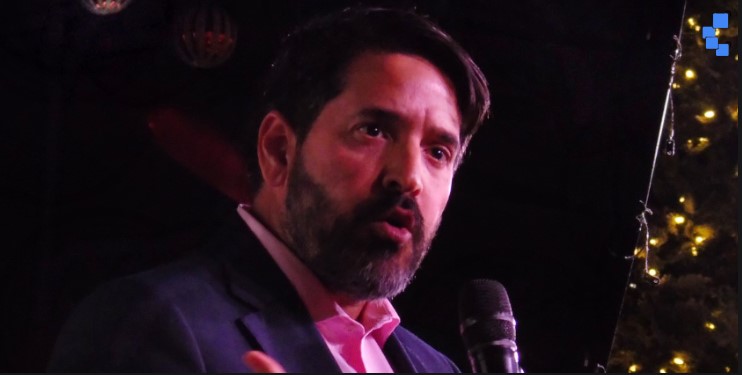
During the launch of the Kontigo Business platform in Caracas on December 15 (an event in which CriptoNoticias also participated), Venezuelan economist and university professor Asdrubal Oliveros argued that adopting USDT is no longer an option.. that, It will be an essential need for the national private sector.
According to Oliveros, the country’s financial ecosystem has “mutated” from a model based on dollar cash and bank transfers to a scheme in which “USDT is the protagonist.”
Currently, certification platforms such as Kontigo and Crixto They control 80% of the country’s money supplyaccording to Oliveros’ figures. This will give banks a 20% participation in resource allocation to the private sector.
Regarding this transition, economists pointed out the following: Companies needed to understand these new paradigms. In his words:
For the private sector, USDT is no longer an option. You need to understand the world of cryptocurrencies. This is because liquidation elements are occurring in a significant way in the world of cryptocurrencies.
Asdrubal Oliveros, Venezuelan economist and financial consultant.
Financial results for the second semester will change significantly
The statistics Oliveros presented show changes from July 2025. In the first half of this year, the state provided an average of $383 million per month to the private sector for foreign exchange interventions, of which $340 million was settled through traditional banking transactions and $43 million through digital mechanisms.
However, in the second semester, the composition changed. Although the total injection volume is stable, The state has now cleared $310 million in cryptocurrency claims Oliveros said 70 million went through banks.
The significant decline in traditional bank payments has forced businesses to look for solutions in the digital currency environment to maintain their supply chains. Analysts emphasized that Use of USDT in Venezuela “acts as a hedging instrument” In the face of bolivar inflation reaching 400% and dollar inflation of 32%.
From their perspective, USDT “becomes a protection mechanism” for corporate cash flows and personal savings because it is more volatile than inflation. This takes into account that “approximately 23% of the Venezuelan population is familiar with the use of cryptocurrencies,” according to Oliveros’ figures.
“So many Venezuelans are using applications like Kontigo to protect their money,” he said.
Challenges and future prospects for corporate society
Despite advances in technology, Oliveros believes that the business sector Still facing a huge learning curve. Although citizens were early adopters of these tools to protect their incomes, many businesses “still view the environment with suspicion,” he said.
In that sense, the economist stressed that companies “need to build a financial strategy” that incorporates the “crypto world.” This is to optimize financial management and supplier payments.
Mr. Oliveros emphasized that corporate financial management is: Now we need to work in 3D: bolivar, dollar, digital assets. Therefore, compliance, accounting records, and tax preparation will be key next year. Especially as traditional banking continues to integrate with digital assets.
Looking ahead to 2026, Oliveros predicts that the use of crypto platforms “will continue to play an important role in Venezuela” as “the world is more open to crypto issues today.”
“The integration of traditional and crypto banks continues to grow, and we believe this paradigm will continue to strengthen next year,” he concluded.