

Bitcoin has rallied more than 12% since plummeting to a low of $80,000 last week, giving the market a brief sense of relief after a period of intense capitulation. Despite this rebound, fear and uncertainty continue to dominate sentiment, especially following what analysts described as the largest capitulation of short-term holders in Bitcoin history.
Related books
This wave of realized losses has been rapid, aggressive and record-setting, leaving many investors wondering whether the recent recovery is sustainable or just a temporary pullback in a broader downward trend.
The road ahead remains difficult, according to new data from Glassnode. Analysts explain that for Bitcoin to regain meaningful gains, it will need to break out of a major supply cluster formed by top buyers early in the cycle. momentum.
These clusters represent areas where many investors may have previously bought at high prices and are now looking to exit at breakeven, increasing the likelihood of strong sell-side pressure as Bitcoin rises.
Bitcoin faces significant supply barriers
glass node report Bitcoin is currently approaching two major supply clusters that will play a decisive role in determining whether the recent rally can develop into a sustained recovery. Prices for the first cluster range between $93,000 and $96,000, and the second cluster (a much larger and more structurally important cluster) ranges from $100,000 to $108,000.
These zones are formed by intense buying activity early in the cycle and represent areas where many investors are currently sitting underwater or near break-even.
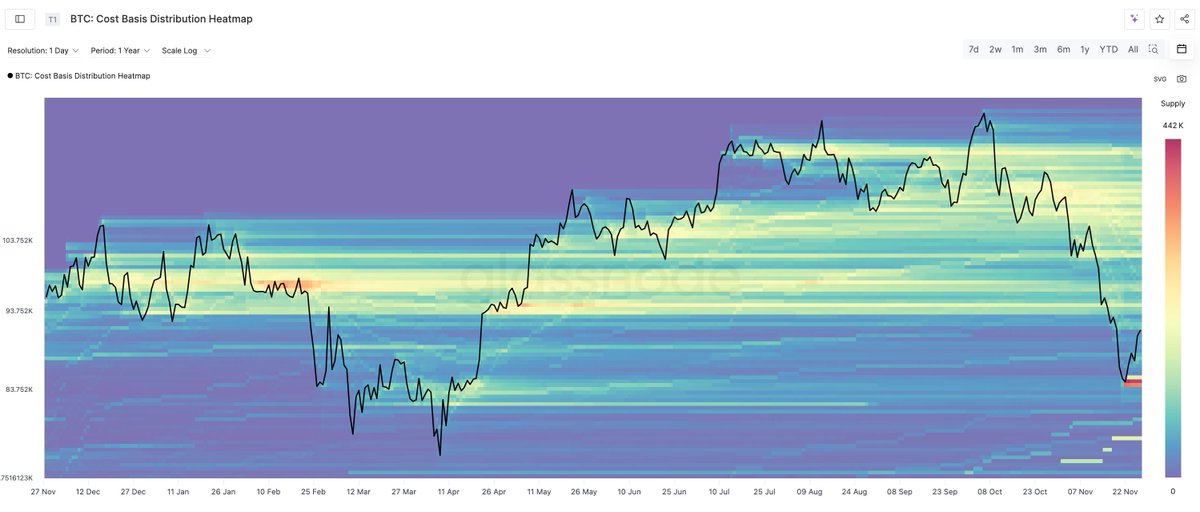
For this reason, Glassnode points out that these ranges generally act as strong resistance, as recent buyers who have endured recent drawdowns may choose to sell once prices return to entry levels. This dynamic creates temporary supply walls that can slow momentum even in moments of positive recovery.
Whether Bitcoin can break through these clusters will determine whether it can reestablish its path to new all-time highs or remain trapped under strong circulation pressure. The market is currently entering a critical phase and traders are closely monitoring how BTC behaves as it approaches these levels. A clean breakout could signal renewed confidence, while a rejection could indicate that the broader corrective structure is not over yet.
Related books
Test support after weeks of significant decline
Bitcoin’s weekly chart shows that the market is attempting to stabilize after one of the most aggressive drawdowns of the cycle. After a strong rally to the $80,000 area last week, BTC has rebounded to the $91,500 area, indicating that buyers are finally stepping into key support. This rebound coincides with a strong weekly candlestick showing a long downside, a classic sign of demand absorption during a significant decline.
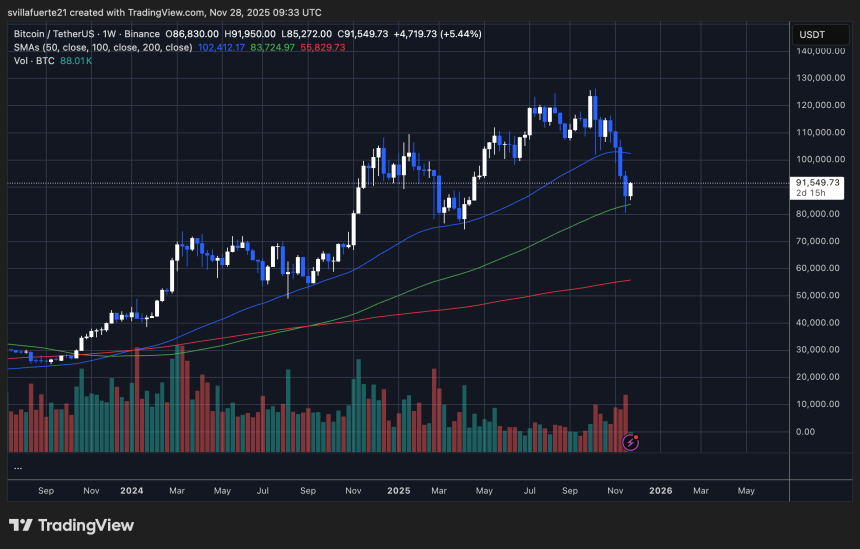
However, despite this pushback, broader structures remain fragile. Prices are trading below their 50-week moving average, a level that has historically served as reliable support throughout bullish phases. Losing this dynamic support earlier this month was a significant technical break, and BTC is currently trying to claw it back from below, which is typically a difficult move that often acts as resistance.
Related books
The 100-week moving average near the mid-$80,000s proved important, halting the decline and serving as a key area for buyers to defend the trend. As long as BTC remains above this zone, the overall market will avoid confirming a deeper macro reversal.
Volume continues to rise, reflecting capitulation levels of activity, and the market is now entering a decisive phase. A sustained close above $92,000-$94,000 would strengthen the prospects for a recovery, while a rejection would risk a retest of the $80,000 support.
Featured image from ChatGPT, chart from TradingView.com